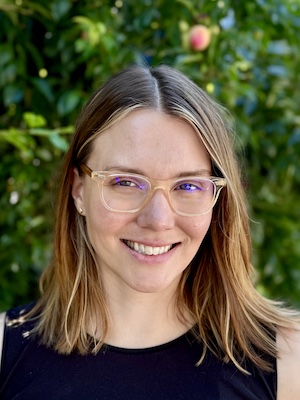
I help social impact organizations build data pipelines and tools to hold themselves accountable—as a data scientist, researcher, and Citizen.
I am curious about how programs, services, and policies can be designed to actually change the lives of the people they're trying to serve. I see my work catalyzing impact for vulnerable populations, human and beyond, by first collaboratively framing problems and solutions.
I define impact at the intersection of both technical and social systems to create impact. I test assumptions through coded proofs of concept that I can evaluate according to the stakeholder theory of change. I care about who gets access, whose voice is considered, and what infrastructure makes participation possible.
How could we work together? → Let me know!
How I Approach the Work
I love to build proof of concepts and prototypes with code to facilitate conversation but hold them lightly. I want to understand: what lever does this touch? Who are the stakeholders? What does a good ending look like? This is systems thinking applied before design.
I lead with learning. I don’t assume I know everything, and I ask collaborators to help shape what gets built. I frame my technological contributions of data, AI, and UX as tools in service of a vision others help define, rather than imposing solutions.
I care about facilitation as a discipline equal to engineering. Data isn’t just a pipeline output—when combined with human-centered facilitation, its design can enable conversation, connect stories, and create feedback loops between stakeholders. Facilitation is a design value, and the relevance of technical work relies on it.
I’m drawn to work that is legible at scale but meaningful at the individual level. I’m passionate about the tools and capabilities of technology to understand population-level patterns whilst simultaneously holding space for the reality of plurality outside of the data. Every person and moment in time is unique and is a strength of what it means to be human. I believe good systems design can support and use this as a means for constant improvement.
What is my relationship to impact?
Impact is the organizing purpose of my work. Over time I’ve moved from identifying primarily as a data scientist to seeing myself as someone who catalyzes how problems and solutions are understood—for vulnerable populations, communities, and the ecosystems we all depend on. I care less about the technical skillset itself than about where and how it’s applied.
I’m drawn to work with impact designed in from the start instead of only being measured after the fact: programs built with measurement and human-centered design from the beginning, so they actually change the lives of the people they’re meant to serve. At its core, this work is about shifting power, transparency, and systems toward meeting people where they are and serving real human needs.
How I Collaborate
I work best when there’s genuine co-creation. I bring a draft and invite others to reshape it. I’m energized by thought leadership that operates from multiple angles at once, and I’m drawn to people who can contribute expertise I don’t have: policy, demography, and community organizing.
I notice when I’m doing the “bridging” work — translating between people, domains, or emotional registers. I’m learning to make this more of a conscious choice rather than a reflex.
Recent Projects
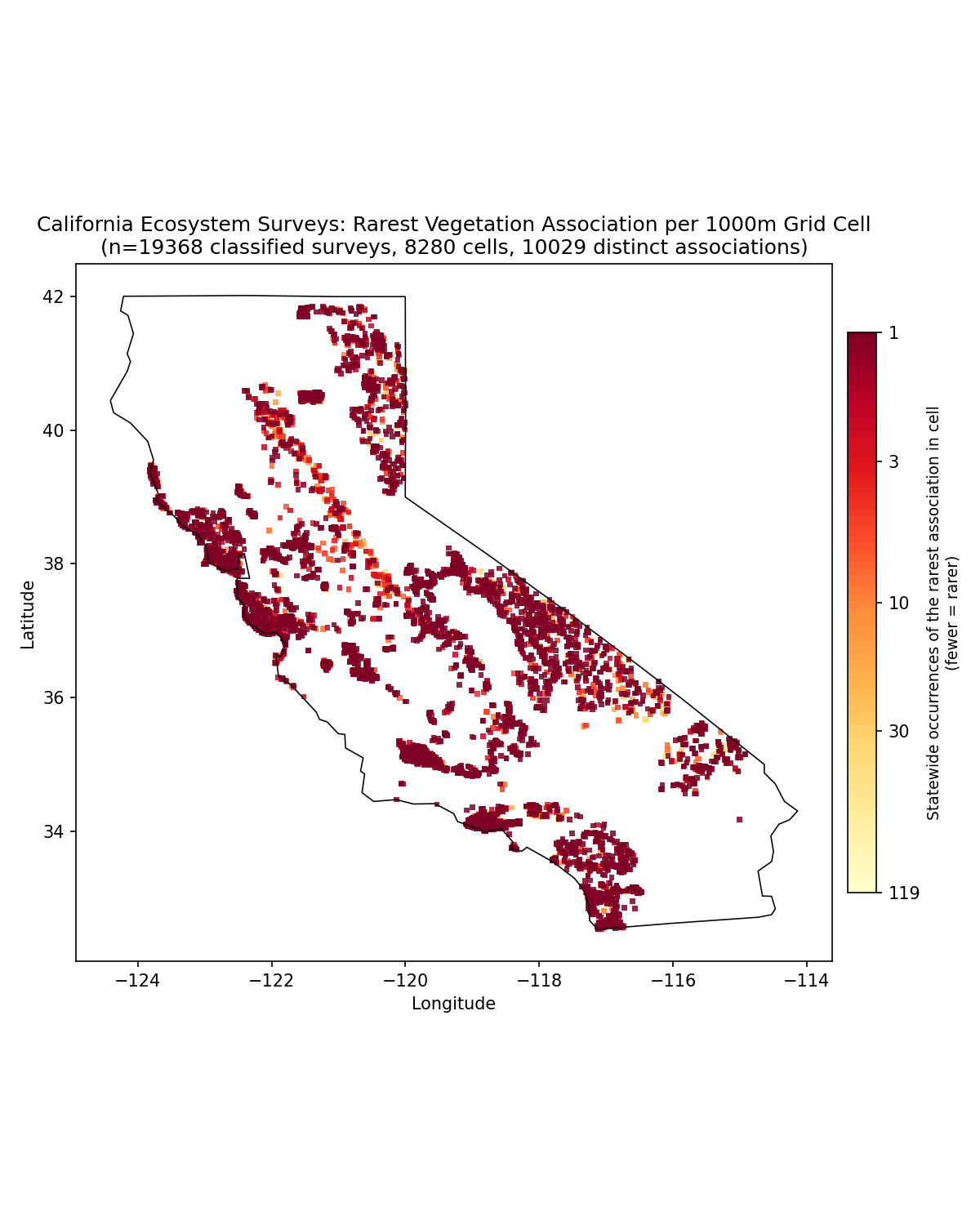
Ecosystem Mapping: Classifying Endangered Plant Communities to Quantify the Ecological Cost of Data Centers
Independent Ecological Data Science Research
Ecosystem classification at the association level—the most precise and ecologically meaningful scale—is often costly, time-consuming, and incomplete, which means conservation resources may be misallocated and protective measures can lag behind ecological changes. This has become...
Get in Touch
- GitHub: katiejohnsonsf
- Email: thisiskatiejohnson@proton.me